E-cigarettes and vaping

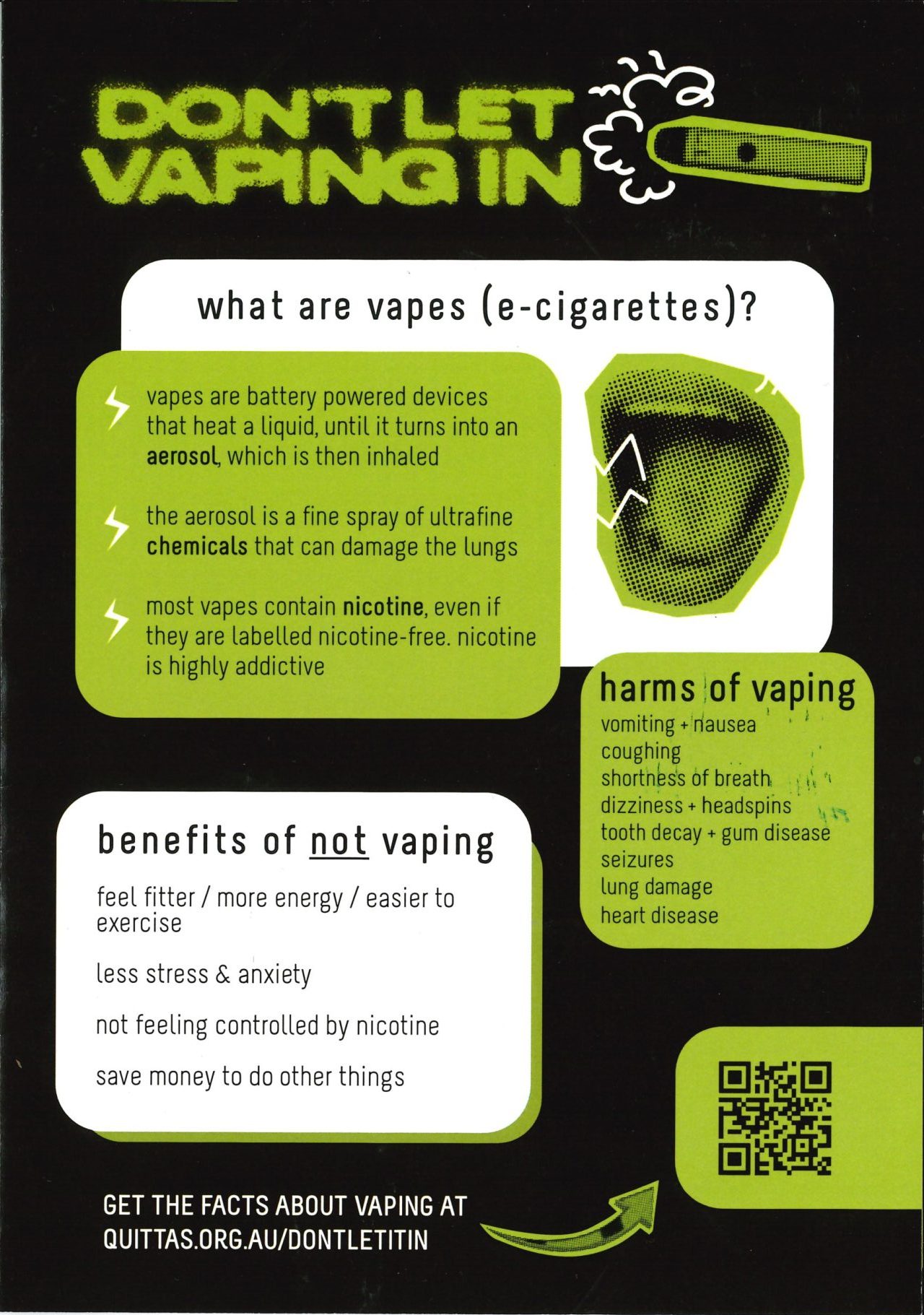
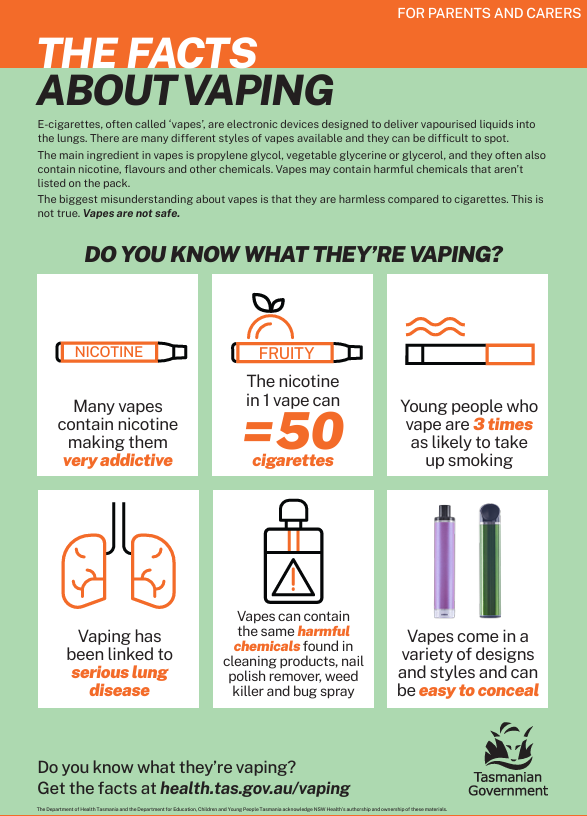
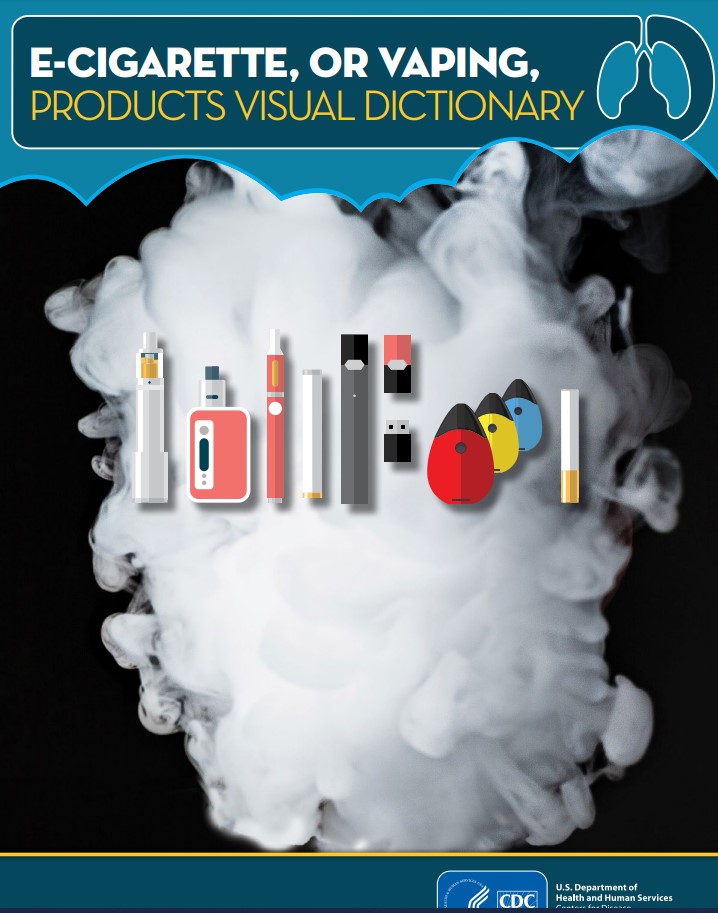
E-cigarettes, more commonly known as vapes, are battery-operated devices that heat a liquid (e-liquid, also called ‘juice’) until it turns into an aerosol, which the user then inhales. They come in all shapes and sizes and can look like a highlighter, pen or USB.

Vape aerosol is not harmless water vapour. It is a fine spray of chemicals and particles that enter the body via the lungs.

Vapes contain many different chemicals none of which have been tested to show they are safe to inhale.


For more information about vaping

Evidence of harms

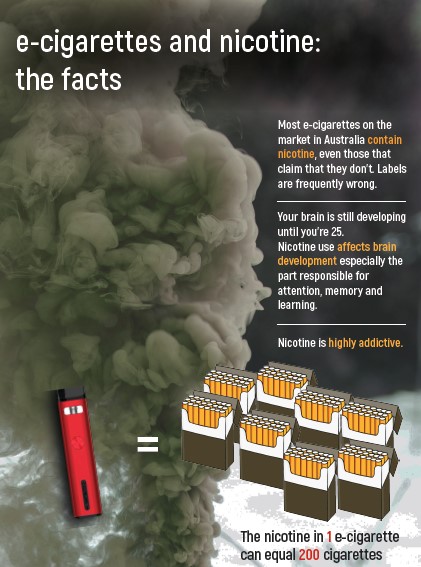
  • Nicotine is highly addictive – it is among the most addictive substances known.  Many illegal vapes are incorrectly labelled ‘nicotine-free’. Most do in fact contain nicotine. Users may think – wrongly – that they are using nicotine-free devices with no risk of addiction.
  • Young peoples’ brains are still developing until they reach 25. Nicotine harms adolescent brain development impacting memory, attention and concentration.
  • In addition to nicotine, we know that the aerosol inhaled from vapes contains dozens of harmful toxic chemicals, including formaldehyde, and heavy metals (e.g. lead and arsenic have been found). These are substances known to cause damage to the lungs and airways and can damage the brain. They have also been linked to cancer.
  • Inhaling the aerosols from vapes can result in toxic chemicals and fine particles lodging deep in the user’s lungs, increasing their risk of respiratory diseases.
    • Irritation of the mouth and airways
    • Persistent coughing
    • Nausea and vomiting
    • Dizziness and headaches
    • Respiratory problems and permanent lung damage
    • Harm to the developing adolescent brain
    • Nicotine dependence
    • Vaping can lead to smoking. Non-smokers who vape are 3X more likely to take up smoking tobacco

    The long-term health impacts of vaping remain unknown.

    For more detailed information about the harms and safety risks of vaping.

Can vapes help people to quit smoking?

Currently there is insufficient evidence to promote the use of vapes for smoking cessation. To date, no nicotine vaping products have been approved by the Therapeutic Goods Administration for efficacy, quality and safety.

Nicotine vaping products are not ‘first line’ treatments for stopping smoking; there are many other products available to quit smoking that are known to be safe and effective.

While some people may have successfully quit smoking using vapes, the overall evidence of the effectiveness of these products as a smoking cessation aid remains limited.

Evidence-based best practice nicotine dependence treatment is a combination of:

What support is there to help people to quit vapes?

    • A doctor, nurse practitioner or pharmacist can provide advice on different options to help with quitting.
    • Quitline 13 7848 can help with tips and strategies, correct use of smoking cessation pharmacotherapy and offers ongoing support. Refer here.
    • My QuitBuddy app. This free app has practical tips and advice and also tracks how much money a person saves over time when they quit.
    • Quit Tasmania’s website has practical advice and support for people, no matter what stage of their quitting journey they are on.
  • Direct them to our Don’t Let Vaping micro site.  Tailored for young Tasmanians who vape, smoke and want to quit.

     

    • Quit Tasmania offers free 3 hour ‘Supporting People to Stop Smoking & Vaping’ training to service providers state-wide. This will give you knowledge and tools to support your clients/patients. For more information

Further information